Novus Ordo Seclorum
Novus Ordo Seclorum
Couldn't load pickup availability
A Roman pagan prophecy from 40 BC ended up on the back of every dollar bill in 1935. Read what it says again.
Why this tee
Fit: Wears like a stone-cut inscription should — slim through the torso, structured mid-weight that holds the carved-letter graphic flat against the chest, never billows.
Print: Chest-sized engraved-stone-tablet graphic in cream and pale gold ink on black fabric, reads as a fragment from a Roman cornerstone before it reads as a design.
Vibe: For classicists who have translated Eclogue IV in the original Latin, monetary historians who know the Treasury minutes from the 1935 dollar redesign, and anyone who has read the four words on the back of a dollar and thought about what they actually mean before they thought about how much the bill is worth.
The lore
The phrase Novus Ordo Seclorum — "A New Order of the Ages" — appears on the lower scroll of the reverse of the Great Seal of the United States. Charles Thomson, Secretary of the Continental Congress, added it to his final design submission on June 20, 1782, alongside the eye in the triangle and the unfinished pyramid. He did not invent the phrase. He adapted it from a single line in the fourth Eclogue of Virgil, written approximately 40 BC, during the bloodiest decade of the Roman Republic's collapse:
Magnus ab integro saeclorum nascitur ordo — "The great order of the ages is born anew."
Virgil was writing as Octavian's propagandist. The fourth Eclogue prophesies the birth of a child whose arrival will inaugurate a golden age — the return of the goddess Astraea, the rule of Saturn, the end of war, the renewal of agriculture, the dissolution of mercantile shipping. Early Christian commentators, beginning with the Emperor Constantine in his Easter Sunday oration of 313 AD, read the Eclogue as a pre-Christian prophecy of the birth of Christ. Renaissance humanists, including Dante, kept that reading alive. Eighteenth-century neoclassicists — including the founders of the American Republic — read it as a prophecy of the new political order they believed themselves to be inaugurating.
Thomson, a classical scholar fluent in Latin and Greek, chose the phrase deliberately. The Congressional record does not preserve a written explanation of Novus Ordo Seclorum in the way it preserves Thomson's gloss on the eye and the pyramid. The phrase was approved, engraved, and printed without elaboration.
In 1935, Secretary of Agriculture Henry Wallace — a thirty-second-degree Freemason and an enthusiast of esoteric symbolism — proposed to President Franklin D. Roosevelt that the reverse of the Great Seal, never previously rendered in mass circulation, be placed on the redesigned one-dollar bill. Roosevelt, also a Freemason, approved. Wallace and Treasury Secretary Henry Morgenthau Jr. signed off on the layout. From mid-1935 onward, every American dollar has carried the phrase.
A Roman pagan prophecy of a returning child, on the currency of a republic founded as a Christian commonwealth, framing a symbol whose iconography traces back to pre-dynastic Egypt. The phrase is right there. So is the pyramid. So is the eye. The official explanation has not been added in 244 years.
Primary source
The full record of Charles Thomson's 1782 submission and the congressional adoption of the Great Seal — including the Latin mottoes — is held at the National Archives: The Great Seal: Celebrating 233 Years of a National Emblem — National Archives, Pieces of History, 2015.
Sizing & styling
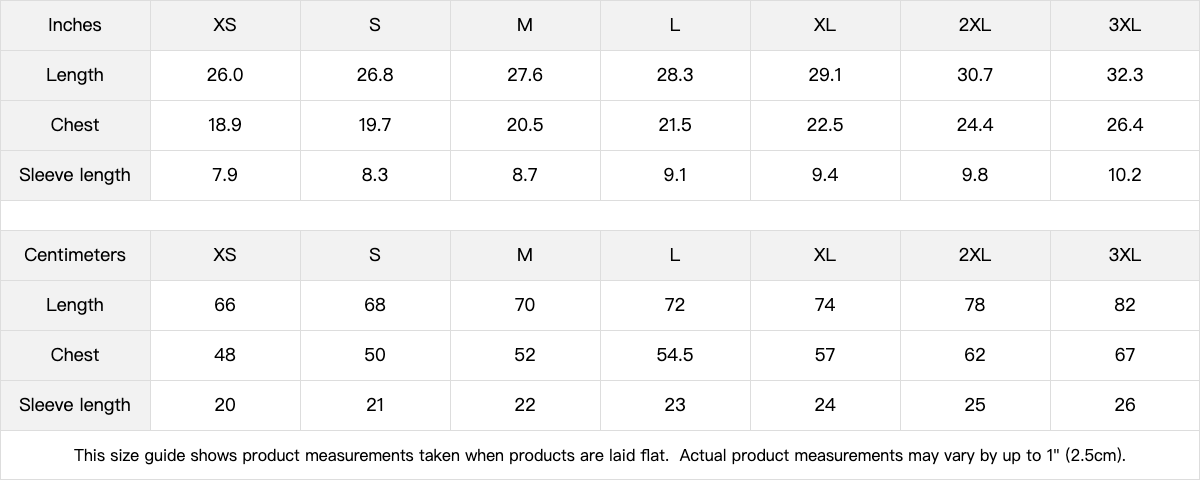
Slim fit through the chest and waist — size up one for a relaxed cut. Wears clean under a charcoal wool overcoat with the inscription centered at the chest, or on its own with dark denim and black leather boots for daily wear.
Fabric & care
100% compact-yarn combed cotton, 210gsm mid-weight, pre-shrunk, bio-polished, single-needle stitched neckline, ribbed cotton-poly collar, tear-away label. Heather Gray is 90% cotton / 10% viscose. Machine wash cold, tumble dry low, do not iron the print.
Share