Reel History
Reel History
Couldn't load pickup availability
Every archive has a gap where the primary source should be.
Why this tee
Fit: Drapes like a film school acquisition — mid-weight, lived-in from the first wear, slim through the body without restricting the kind of movement that happens when you're gesturing at a light table.
Print: Chest-sized film reel and archival frame graphic, soft-touch ink with the grain and tonal range of a 16mm kinescope — reads as projection room aesthetic before it reads as conspiracy.
Vibe: For archivists who've requested accession 255-69A-4099 at the Washington National Records Center, anyone who's studied the kinescope recordings at CBS News Archives, and the documentary researchers who understand that "the only video contained in that collection was the broadcast film" is a sentence with weight.
The lore
The Apollo 11 mission produced footage at multiple points in the chain. The raw slow-scan television signal was captured at tracking stations in Goldstone, California; Honeysuckle Creek, Australia; and Parkes, Australia. That footage — sharper, higher-contrast, and technically superior to anything broadcast — was recorded onto one-inch M-22 telemetry tapes at each location. The tapes were then shipped to the Goddard Space Flight Center.
In the early fall of 2006, a search team revisiting the Washington National Records Center found accession documentation indicating that 2,614 magnetic tape containers had originally been logged in NASA's holdings. By the time they looked, most had been withdrawn by Goddard in the 1970s, and a subsequent review of weekly management reports confirmed that 25,443 boxes of magnetic tapes had been pulled from storage in 1981 alone.
Forty-five tapes containing the raw Apollo 11 moonwalk footage were almost certainly among them — degaussed, recertified, and reused to satisfy a network-wide tape shortage. The story reached the front page of the Sydney Morning Herald on August 5, 2006 under the headline "One giant blunder for mankind: how NASA lost moon pictures."
What remains is the broadcast record. A scan-converted, downgraded, multiply-dubbed film of something that may have looked very different in the original.
Primary source
The full investigative timeline of the lost Apollo 11 tapes, including the 2006 records center findings and the 1981 withdrawal documentation, is detailed in NASA's Apollo 11 Telemetry Data Recordings: A Final Report.
Sizing & styling
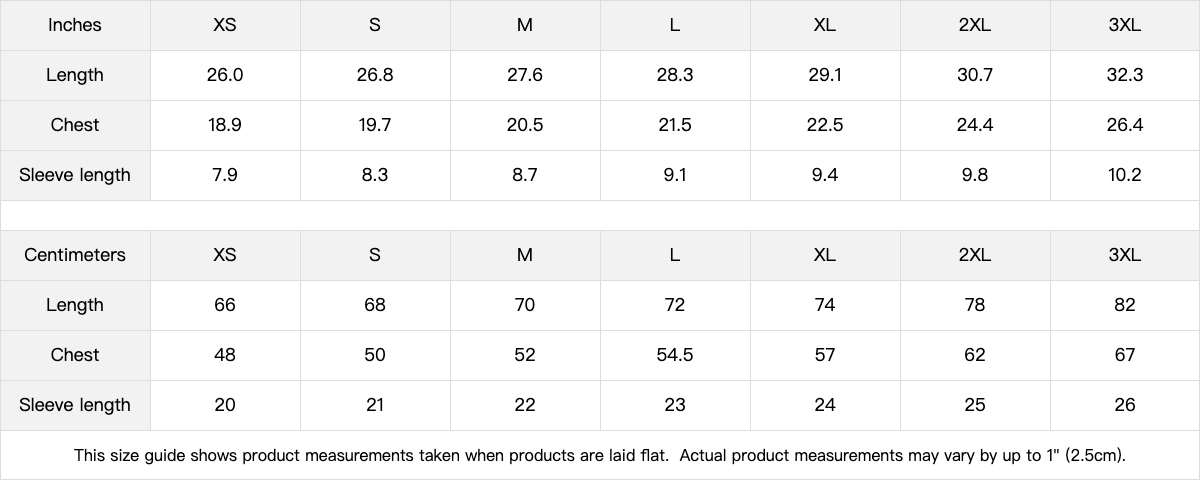
Slim through the chest and waist — if you're between sizes or want the tee to wear more loosely, size up one. Works clean on its own with dark denim or chinos, or layered under an open jacket the way a projection room regular wears one: graphic forward, everything else secondary.
Fabric & care
100% compact-yarn combed cotton, 210gsm mid-weight, pre-shrunk, bio-polished, single-needle stitched neckline, ribbed cotton-poly collar, tear-away label. Heather Gray is 90% combed cotton / 10% viscose. Machine wash cold, tumble dry low, do not iron the print.
Share