The Eye of Providence
The Eye of Providence
Couldn't load pickup availability
1525, Jacopo Pontormo painted a three-faced Trinity over a Carthusian dinner. Decades later, the Counter-Reformation banned it and somebody quietly painted an eye in a triangle over the top.
Why this tee
Fit: Drapes like a cathedral-side chapel curtain — slim through the body, structured mid-weight, the cut you can wear to a wedding or a wake and not feel out of place.
Print: Chest-sized Renaissance-fresco graphic in cream, warm gold, and pale ochre ink on black fabric, the kind of restrained ornament that reads as ceiling-pediment detail before it reads as merchandise.
Vibe: For art-history students who have stood inside the refectory at the Certosa del Galluzzo and noticed what was painted over what, iconographers who can date the Counter-Reformation by the symbols that disappear and the ones that replace them, and anyone who has wondered why an Egyptian protection amulet ended up on a Catholic cathedral pediment.
The lore
Around 1525, the Florentine Mannerist Jacopo Pontormo painted Supper at Emmaus for the refectory of the Carthusian monastery at Galluzzo, just outside Florence. The painting depicts the moment from the Gospel of Luke when the resurrected Christ reveals himself to two disciples by breaking bread at a roadside inn. Behind Christ's head, Pontormo painted his original Trinitarian symbol — a single face with three sets of eyes and three noses, the vultus trifrons, an unusual but theologically literal rendering of the Holy Trinity.
The Council of Trent (1545–1563) enacted the Catholic Counter-Reformation's sweeping reforms to religious art. Among the prohibitions: depictions of the Trinity that combined three faces or three heads into one body. The vultus trifrons was specifically banned.
The painting was subsequently altered. The original three-faced Trinity above Christ's head was painted over, and a new symbol was added: a single human eye inside an equilateral triangle, surrounded by a glory of golden beams. The Uffizi Gallery, which now holds the work, identifies the eye in the triangle as "the result of a posthumous repainting job, designed to conceal the original three-sided face." The earliest known instance of the Eye of Providence in Christian art may therefore be a censorship overlay — the symbol added because the original was forbidden.
Once added, the eye-in-triangle propagated. It entered the iconographic vocabulary of the Catholic Counter-Reformation, appeared on cathedral pediments and tympanums across France, Italy, and Austria, was adopted by Anglican churches in the Stuart period, and migrated into the visual language of European Freemasonry by the early eighteenth century. The Aachen Cathedral pediment carries it. So does St. Peter's Basilica in Rome. So does the Sansovino Library in Venice. So does Karlskirche in Vienna.
In 1782, Charles Thomson and the third Great Seal committee adopted the symbol — by then already a fixture in both Christian and Masonic iconography — for the reverse of the seal of the United States. The committee did not invent the eye. They borrowed it from a tradition that had been in continuous use for two and a half centuries, which had itself overlaid an even older Egyptian source.
The Smithsonian's account traces the chain: Egyptian Wedjat → Renaissance Christian oculus Dei → Pontormo overpaint → Counter-Reformation iconography → eighteenth-century Freemasonry → the back of the dollar bill.
Primary source
The Uffizi Gallery's catalogue entry for Pontormo's Supper at Emmaus explicitly documents the posthumous overpaint of the Trinity symbol with the Eye of Providence: Supper at Emmaus by Pontormo — Uffizi Galleries. The broader iconographic chain is laid out in The Secret History of the Eye of Providence — Smithsonian Magazine.
Sizing & styling
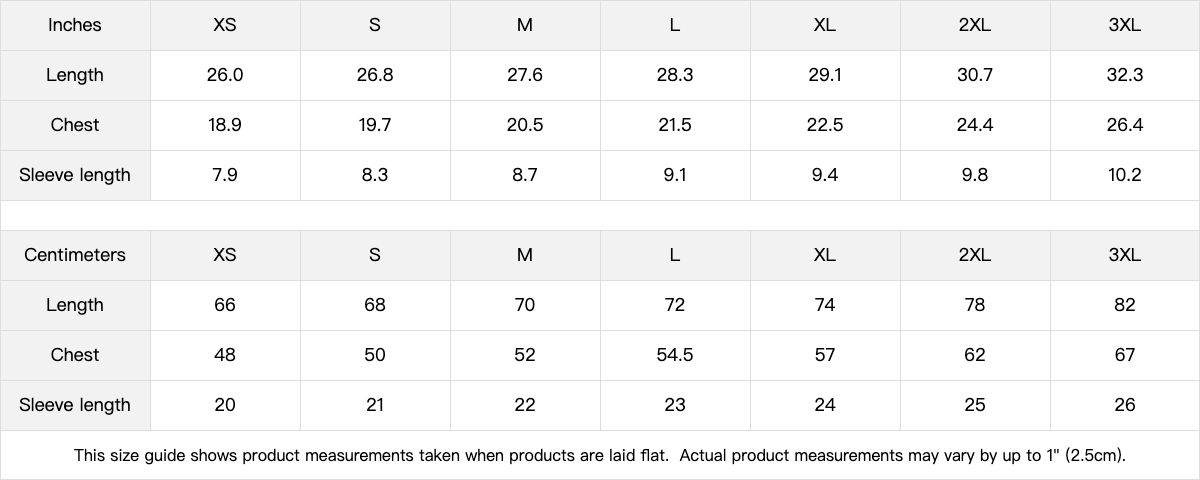
Slim fit through the chest and waist — if you are between sizes or prefer a roomier cut, size up one. Wears clean under a single-breasted black wool jacket with the radiating beams just visible above the lapel, or on its own with charcoal trousers and a black leather Chelsea boot.
Fabric & care
100% compact-yarn combed cotton, 210gsm mid-weight, pre-shrunk, bio-polished, single-needle stitched neckline, ribbed cotton-poly collar, tear-away label. Heather Gray is 90% cotton / 10% viscose. Machine wash cold, tumble dry low, do not iron the print.
Share