The Great Seal
The Great Seal
Couldn't load pickup availability
June 20, 1782: Charles Thomson handed Congress a 13-step pyramid and an eye in a triangle, and no founding father ever explained what they were looking at.
Why this tee
Fit: Drapes like a senate-floor pocket square — slim through the torso, mid-weight enough to hold its shape under a blazer, never bunches at the hem.
Print: Chest-sized engraved-medallion graphic in cream and warm gold ink, the kind of plate work that reads as a Treasury archive document before it reads as a design.
Vibe: For numismatists who know which dollar series first carried the reverse, constitutional originalists who can recite the 1782 description from memory, and anyone who has flipped a one-dollar bill over and asked the same question every honest citizen eventually asks.
The lore
On June 20, 1782, after six years of debate, three failed committees, and four full design submissions, the Continental Congress approved a single drawing submitted by its Secretary, Charles Thomson. The drawing was the final design of the Great Seal of the United States. The obverse — the eagle, the olive branch, the thirteen arrows — became the front of the dollar bill, the State Department's diplomatic seal, the visual identity of the federal government.
The reverse was different. A 13-step unfinished stone pyramid with the year MDCCLXXVI carved into its base. Floating above the pyramid's apex, a single eye inside an equilateral triangle, surrounded by a glory of radiating beams. Above the triangle, the Latin inscription Annuit Coeptis — "He has favored our undertakings." Below the pyramid, Novus Ordo Seclorum — "A New Order of the Ages."
Thomson's own explanation, submitted to Congress in writing, gave the elements but not the source. He described the eye and the motto as alluding to "the many signal interpositions of providence in favour of the American cause." That was the entire theological gloss. Where the symbol came from, who first paired the eye with the triangle, why the pyramid was unfinished, why the year was carved in Roman numerals on a republican monument — none of these questions were answered in the historical record.
The reverse die was never cut. From 1782 to 1935, the back of the Great Seal existed only on paper. In 1935, Secretary of the Treasury Henry Morgenthau Jr. and Secretary of Agriculture Henry Wallace persuaded President Franklin D. Roosevelt to place both sides of the Great Seal on the redesigned one-dollar bill. The pyramid and the eye have been in every American wallet since.
The official records of the Confederation Congress, now held at the National Archives, contain the original Thomson draft, the previous committee submissions, and the line-by-line congressional debate. They do not contain an explanation of the symbol's provenance.
Primary source
The full congressional record and Thomson's design memorandum are preserved at the National Archives: The Great Seal: Celebrating 233 Years of a National Emblem — National Archives, Pieces of History, 2015.
Sizing & styling
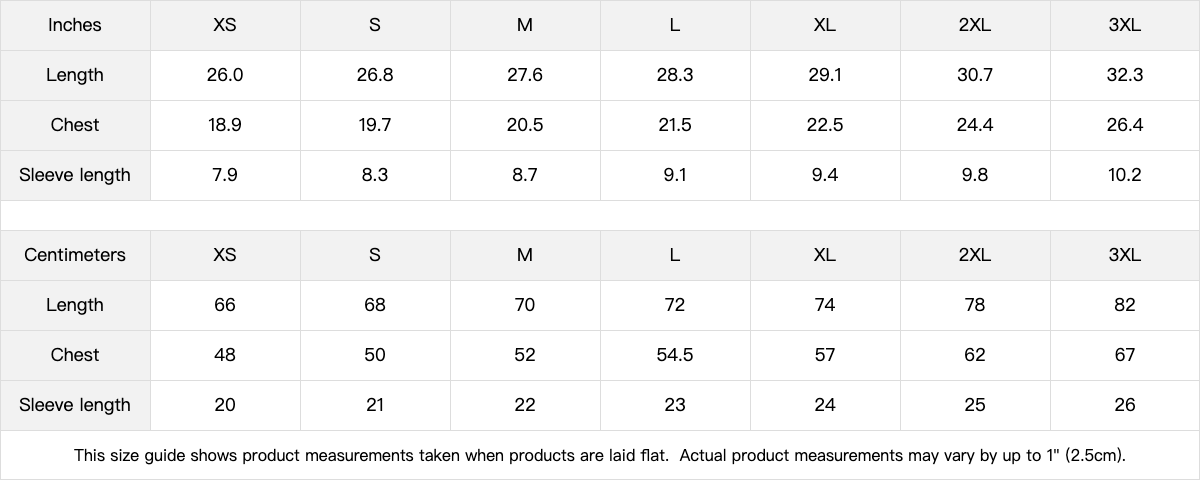
Slim fit through the chest and waist — if you are between sizes or prefer a relaxed silhouette, size up one. Wears clean with raw indigo denim and a leather belt, or layered under a navy unstructured blazer with just the engraved medallion peeking above the lapel.
Fabric & care
100% compact-yarn combed cotton, 210gsm mid-weight, pre-shrunk, bio-polished, single-needle stitched neckline, ribbed cotton-poly collar, tear-away label. Heather Gray is 90% cotton / 10% viscose. Machine wash cold, tumble dry low, do not iron the print.
Share