The Soundstage
The Soundstage
Couldn't load pickup availability
The front-projection system Kubrick developed for 2001 was, in 1965, the most photorealistic composite technique in film production.
Why this tee
Fit: Drapes like a grip's worn-in crew tee — mid-weight, comfortable across the shoulders, slim enough to read clean under stage lighting or natural.
Print: Chest-sized soundstage floor plan and lighting rig graphic, museum-grade ink in the high-contrast palette of a film production technical drawing — reads as set design documentation before it reads as graphic.
Vibe: For production designers who've studied the MGM Boreham Wood stage dimensions, anyone who's read the Applied Physics Laboratory section of the NASA tapes report, and the cinematographers who know that front-projection and slow-scan television were operating at the same resolution threshold in the late 1960s.
The lore
Stanley Kubrick began production on 2001: A Space Odyssey in December 1965. One of the central technical problems the film posed was how to depict lunar and planetary surfaces convincingly without leaving a stage in Boreham Wood, England. The solution was a front-projection system of Kubrick's own refinement, using a Scotchlite retroreflective screen and a beam-splitter to project background images that registered as seamlessly real on film.
The system worked. Contemporary reviewers and NASA's own consultants described the space sequences as the most realistic ever filmed. The film opened April 3, 1968 — fourteen months before the Apollo 11 moonwalk.
Separately, at the Parkes Observatory tracking station in New South Wales, engineers received the raw slow-scan television signal from the lunar surface and recorded it on one-inch telemetry tapes. The raw image — before conversion, before broadcast — was described by those who saw it as clear and detailed, substantially better than what was transmitted to the public. A physicist at the Applied Physics Laboratory near Baltimore was later contracted to modify a separate tape recorder to handle the signal from Parkes alone. The tapes he produced were found, years later, to be blank.
Two recording systems. Two sets of lost footage. One of them was definitely a film set.
Primary source
The Library of Congress National Film Registry essay confirming 2001's production timeline, Kubrick's technical methods, and its 1991 Registry selection is available at the LOC National Film Preservation Board. The Parkes station recording and APL tape findings are documented in NASA's Apollo 11 Telemetry Data Recordings: A Final Report.
Sizing & styling
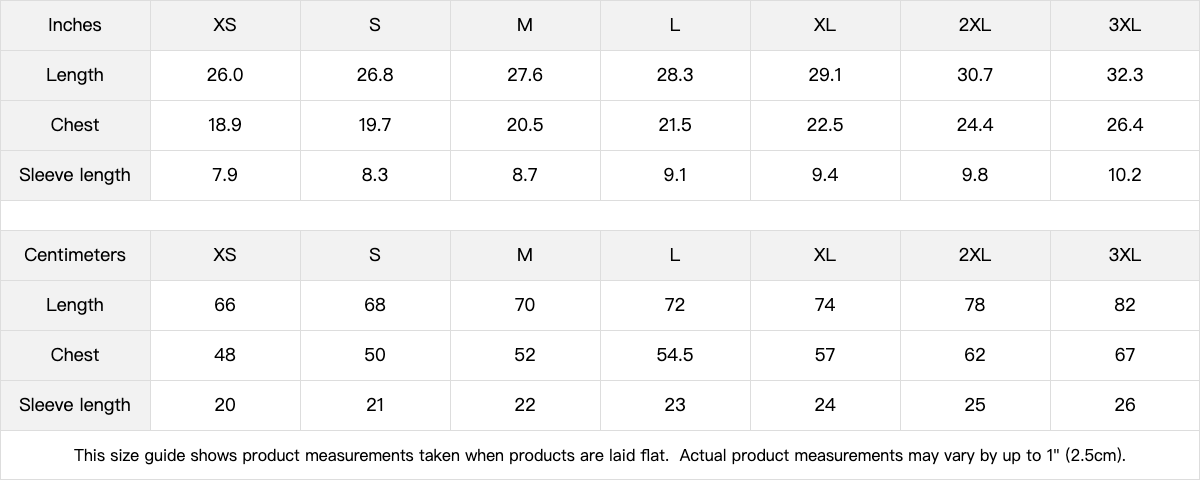
Slim fit through the body — size up one if you want a looser drape or typically sit between sizes. Wears well on its own with straight-leg denim or work trousers, or layered under an open flannel the way a soundstage regular does: the graphic visible, the rest of it unforced.
Fabric & care
100% compact-yarn combed cotton, 210gsm mid-weight, pre-shrunk, bio-polished, single-needle stitched neckline, ribbed cotton-poly collar, tear-away label. Heather Gray is 90% combed cotton / 10% viscose. Machine wash cold, tumble dry low, do not iron the print.
Share